
Covid 19 Support
Home Management of Covid 19
Relax, take a deep breath
You have a high probability of living through this to tell the tale!
- Rest!
- Maintain good hydration
- Self isolate
- Wear a mask when around others
- Get support, epecially emotional & practical upport
- Maintain excellent hygiene and good ventilation
- Tell anyone you have been in contact with to contact their doctor for advice
- Get a pulse oximeter (hand held device which measures oxygen saturation in the blood) from your pharmacy.
- Monitor your fever, shortness of breath, blood oxygen saturation levels, pulse, respiratory rate (someone will have to do this for you)
Supplements to help your body fight.
- Vit D (calciferol 50 000iu weekly or any Vit D 5000iu) daily for 5 days
- Zinc 200mg daily for 5 days
- Nicotinamide (Vit B3) 100mg twice a day for 5 days
- Vit C 1000mg twice a ay for 5 days
- Hot water steam 2 – 3 x a day (put plain boiling water from the ketle into a wide open bowl, put your head over the bowl and cover your head with a towel, breathe mainly through your mouth.
If in doubt, use your common sense and ask for help.

Contact your doctor if;
- Blood oxygen saturation drops (don’t rise above 91 – 92% despite siting up straight and taking good deep breaths)
- Increasing shortness of breath
- Mucous becomes discoloured
- Heart rate remains above 120
- Respiratory rate remains above 25 breaths/minute
- Fever rises above 39C
- Not able to maintain hydration
- Significantly compromised mental state
| What we are checking | Normal | what to do if abnormal | When to call your doctor |
| Temperature | 36 – 37.8 | If >38degrees, take Paracetamol, drink plenty of fluids, keep cool and take off layers from your clothes. | If temperature is persistently above 39degrees |
| Pulse | 50 (for very fit people) – 90b/min | When the body fights infection, the pulse tends to be high. If the pulse is persistently above 110b/ min, ensure you rest well, avoid stimulants like pseudoephedrine and coffee, and if your temp is high, do as above |
Pulse that is above 120b/min at rest is concerning. In light of Covid 19, a pulse like this needs to be assessed by your doctor. She will probably take bloods to check the heart for heart enzymes and to check for clots, and perform an ECG to check the rhythm of the heart and signs of problems with the heart. |
| Oxygen Saturation | Over 95% |
If saturation between 93 -95% : rest, take deep breaths and recheck in about an hour (if you do not have shortness of breath). It is important to know what your baseline resting oxygen saturation is. For the elderly and smokers, saturations as low as 90% resting on room air can be normal. |
Saturation levels of 93% or less with or without shortness of breath warrant review with your doctor. Your doctor will prob- ably do a chest Xray or Scan the lungs to check for signs of pneumonia or clots in the lungs. |
| Blood pressure | 90/60 – 140/90 |
Table provided by Dr Malebo ( Medi well Dainfern.)
You need an Oxymeter
This little device is available at most pharmacies and many online stores. Some medical aids even provide one once you are Covid positive. Your doctor will ask for your vitals from this device when checking in on you.
Pulse oximetry is a noninvasive and painless test that measures your oxygen saturation level, or the oxygen levels in your blood. It can rapidly detect even small changes in how efficiently oxygen is being carried to the extremities furthest from the heart, including the legs and the arms.
The pulse oximeter is a small, clip-like device that attaches to a body part, like toes or an earlobe. It’s most commonly put on a finger, and it’s often used in a critical care setting like emergency rooms or hospitals. Some doctors, such as pulmonologists, may use it in office.
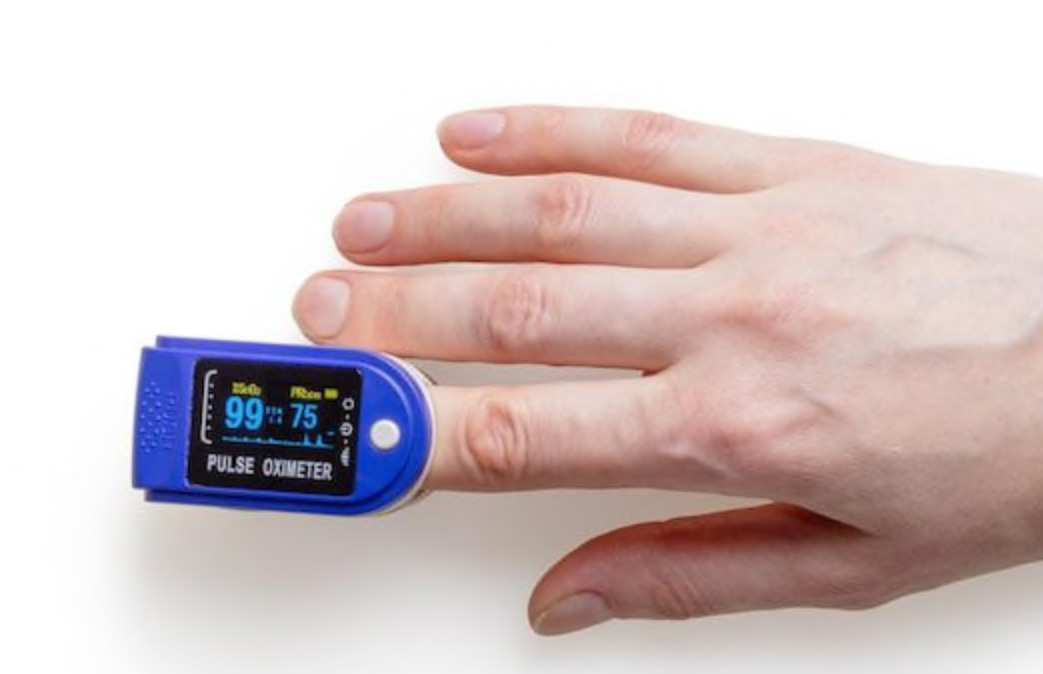
The red flag from this device
Blood oxygen saturation drops (don’t rise above 91 – 92% despite siting up straight and taking good deep breaths)
Exercises to help clear your chest
Following COVID-19 you may find that you have a productive cough and mucus on your chest.
Thee exercise and positions can help you clear your chest. These may be recommended by your phsiotherapist or nurse following COVID 19.
Active Cycle of Breathing Technique (ACBT) exercise consists of three breathing exercises that together help to clear the mucus off your chest.
1. Breathing Control
- Gentle, relaxed breathing with your shoulders relaxed
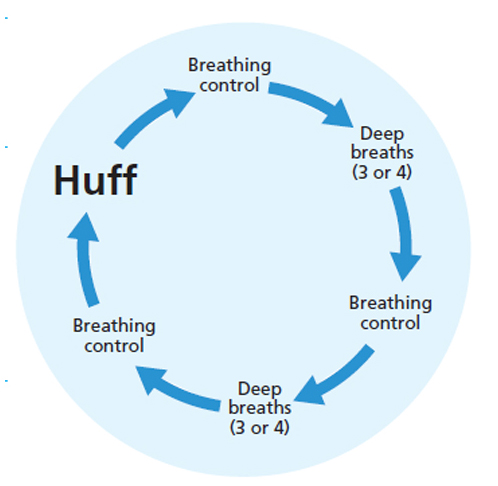
2. Deep breaths
- Breath in slowly and deeply
- Gently breath out without forcing it
- Repeat 3-4 times only (too many can make you feel dizzy
3. Forced Expiration techniques (Huff)
- Take a medium sized breath in
- Breath out forcefully for a short time
- Keep your mouth open and use your stomach and chest muscles
- Think “huffing” a mirror to polish it
- Repeat 1-2 times
- Always finish on a cough or huff
- Stop when your huff is dry on two consecutive cycles
How often and how long
- Continue to do until you feel your chest is clearer
- Clear as much mucus as you can without becoming exhausted
- Perform for at least 10 minutes, but no longer than 30 minutes
- If productive 2-3 times per day